

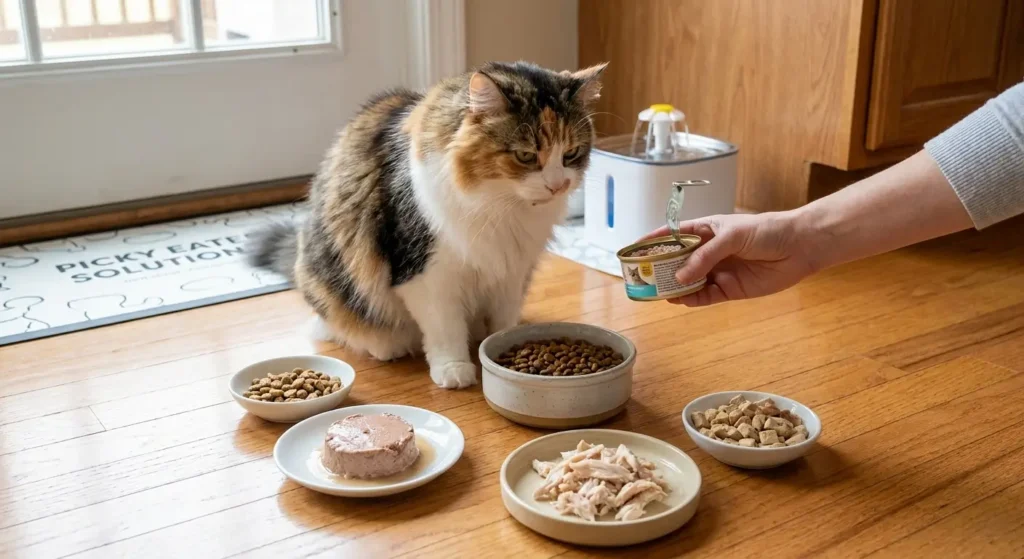
If your cat turns up its nose at the food bowl one day and inhales the same food the next, you are not alone. Fussy eating is one of the most common worries cat owners have, and most of the time it is a solvable problem rather than a medical one.
Below is a practical, no-drama guide to why cats get picky and what actually helps.
Why cats become picky eaters
Cats are creatures of habit with a sharper sense of smell than taste. A food they loved last month can suddenly feel wrong because of a tiny change you never noticed: a new bag, a warmer kitchen, a bowl washed with strong soap.
A cat refusing food is communicating, not misbehaving. The job is to find out what changed.
Common triggers include:
- Food texture or temperature. Many cats prefer wet food served at room temperature, not straight from the fridge.
- Bowl shape. Deep bowls press on sensitive whiskers, a problem often called whisker fatigue.
- Location. A bowl next to a noisy appliance or the litter box puts cats off.
- Free feeding. Food left out all day goes stale and loses aroma.
What actually helps
1. Serve smaller, fresher portions
Offer small amounts at set times rather than one large bowl. Fresh food smells stronger, and a hungry cat on a schedule is a more motivated eater.
2. Switch to a whisker-friendly bowl
A wide, shallow dish lets a cat eat without its whiskers touching the sides. A simple shallow ceramic cat bowl is an inexpensive fix that solves surprising numbers of “fussy” cases.
3. Warm wet food slightly
A few seconds of warmth releases aroma and often restores interest instantly. Aim for body temperature, never hot.
4. Transition foods slowly
When changing brands, mix the new food into the old over 7 to 10 days, a little more each day. A sudden switch is a common cause of refusal and stomach upset.
When to see a vet
Picky eating is usually behavioral, but a real loss of appetite is not. Contact your veterinarian if your cat refuses all food for more than 24 hours, is losing weight, or shows other signs like vomiting, hiding, or lethargy. Cats can develop serious liver problems if they stop eating for even a couple of days.
For most cats, though, a few small changes to how and where you feed them turns mealtime back into the easy part of the day.